If you drive between Denver and Vail often enough, Floyd Hill is one of those stretches of I-70 you know before you see the sign.
Westbound, traffic drops toward Clear Creek and squeezes into a section of highway that has always felt too tight for the amount of traffic using it. Eastbound, the climb back toward Denver can be just as frustrating, especially when morning sun glare hits the windshield or traffic stacks up at the bottom of the hill.
For anyone making the drive from Denver to Vail, Floyd Hill is one of the most important sections of the I-70 mountain corridor to understand.
Now much of that corridor is being rebuilt.
The I-70 Floyd Hill Project covers roughly eight miles of I-70 from County Road 65 at Exit 248 to Colorado Boulevard at Exit 241 near Idaho Springs. CDOT says the project will add a third westbound travel lane, change the highway alignment, straighten roadway curves, rebuild bridges, improve sight distance and add a missing section of frontage road.
We drive this road constantly between Denver International Airport and Vail, so we went down to Floyd Hill to look at the construction firsthand.
The Sharp Turn at the Bottom of Floyd Hill
One of the biggest problems with the existing highway is easy to understand when you actually drive it.
As westbound I-70 comes down Floyd Hill toward Clear Creek, the highway reaches the bottom and makes a sharp turn before continuing toward Idaho Springs and the Veterans Memorial Tunnels.
That turn, combined with the grade, limited sight distance, heavy truck traffic and the two-lane westbound bottleneck, has helped make this stretch one of the most frustrating pieces of the mountain corridor.
The Floyd Hill project is designed to change that geometry, not simply widen the highway in place.
CDOT says the new westbound alignment will address the steep grade and sharp curve at the bottom of Floyd Hill while improving sight distance and safety.
They Are Physically Moving Part of I-70
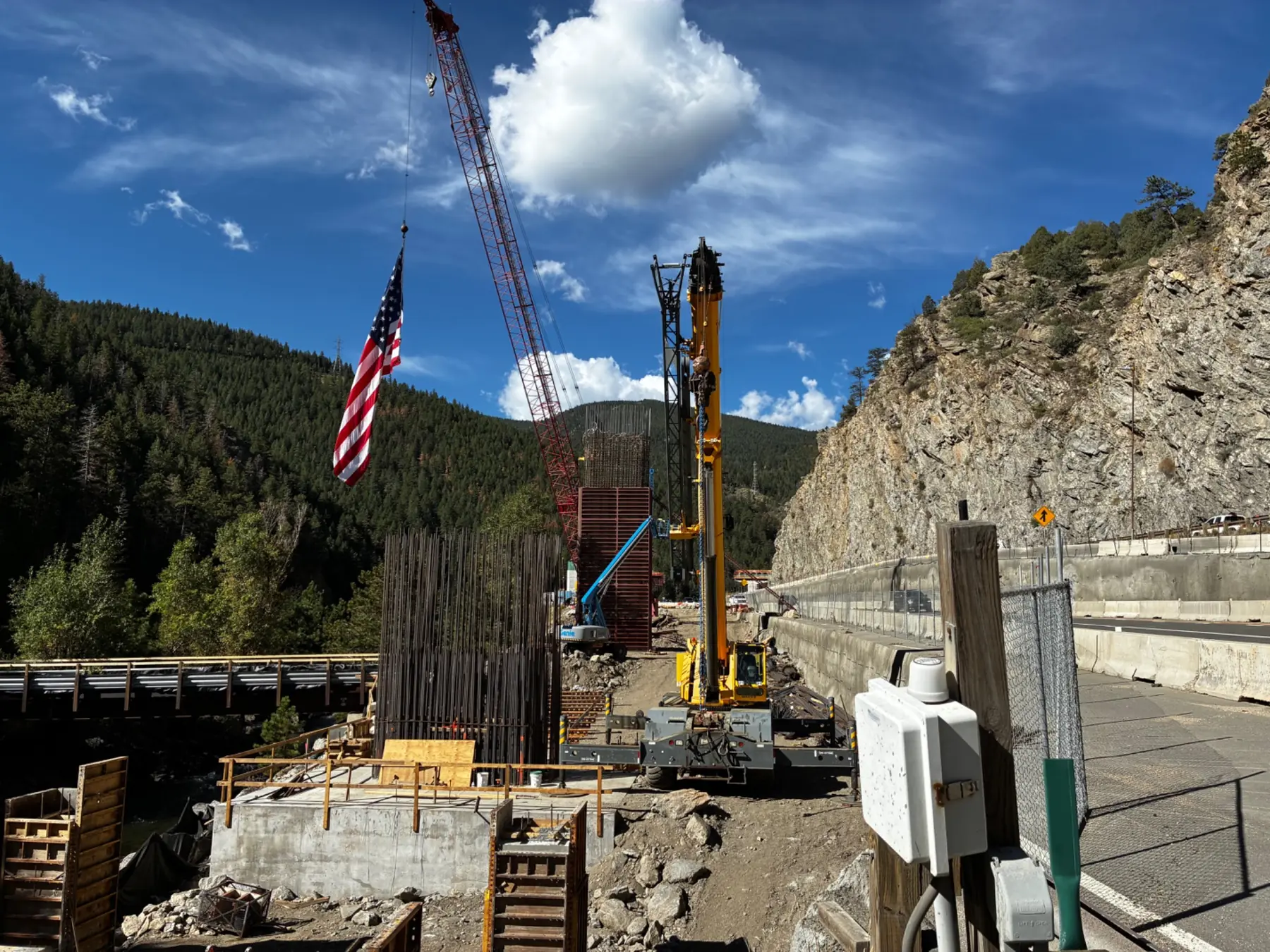
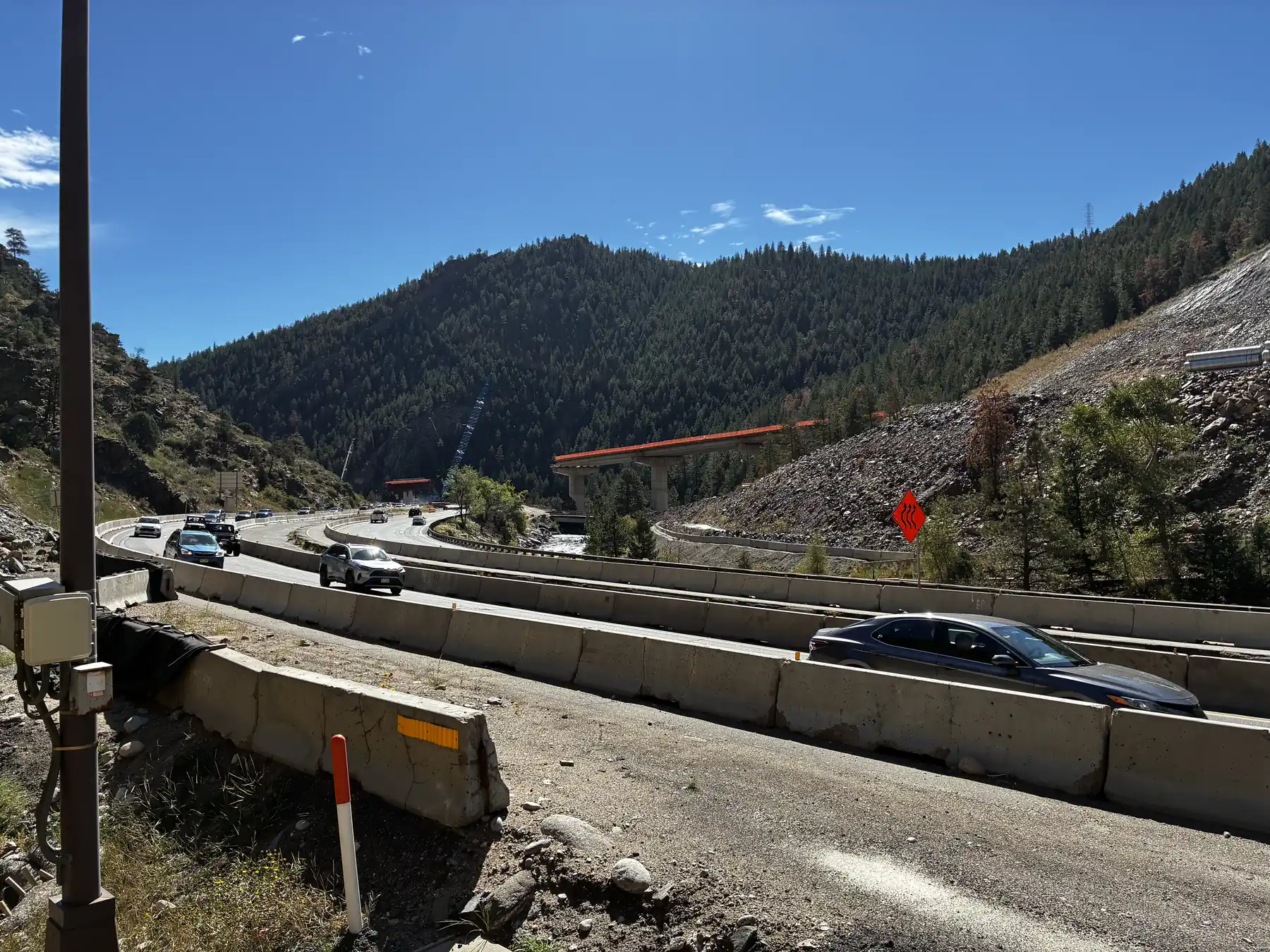
The most impressive part of the project right now is the new elevated westbound alignment being built above and alongside the existing highway.
Near the US 6 interchange at Exit 244, a new concrete segmental bridge is being constructed roughly 20 to 30 feet above the current I-70 lanes. CDOT describes the bridge as part of the new westbound alignment that shifts the highway south into the hillside above Clear Creek.
Standing beside it, the scale is much easier to understand than it is on a project map.
There are enormous concrete piers, rebar cages, cranes, drilling equipment and bridge sections being constructed while normal I-70 traffic continues directly beside the work.
That is probably the most striking thing about the Floyd Hill project: they are rebuilding one of Colorado's busiest mountain highways while keeping the existing highway operating.
The Existing Highway Is Still Carrying Traffic
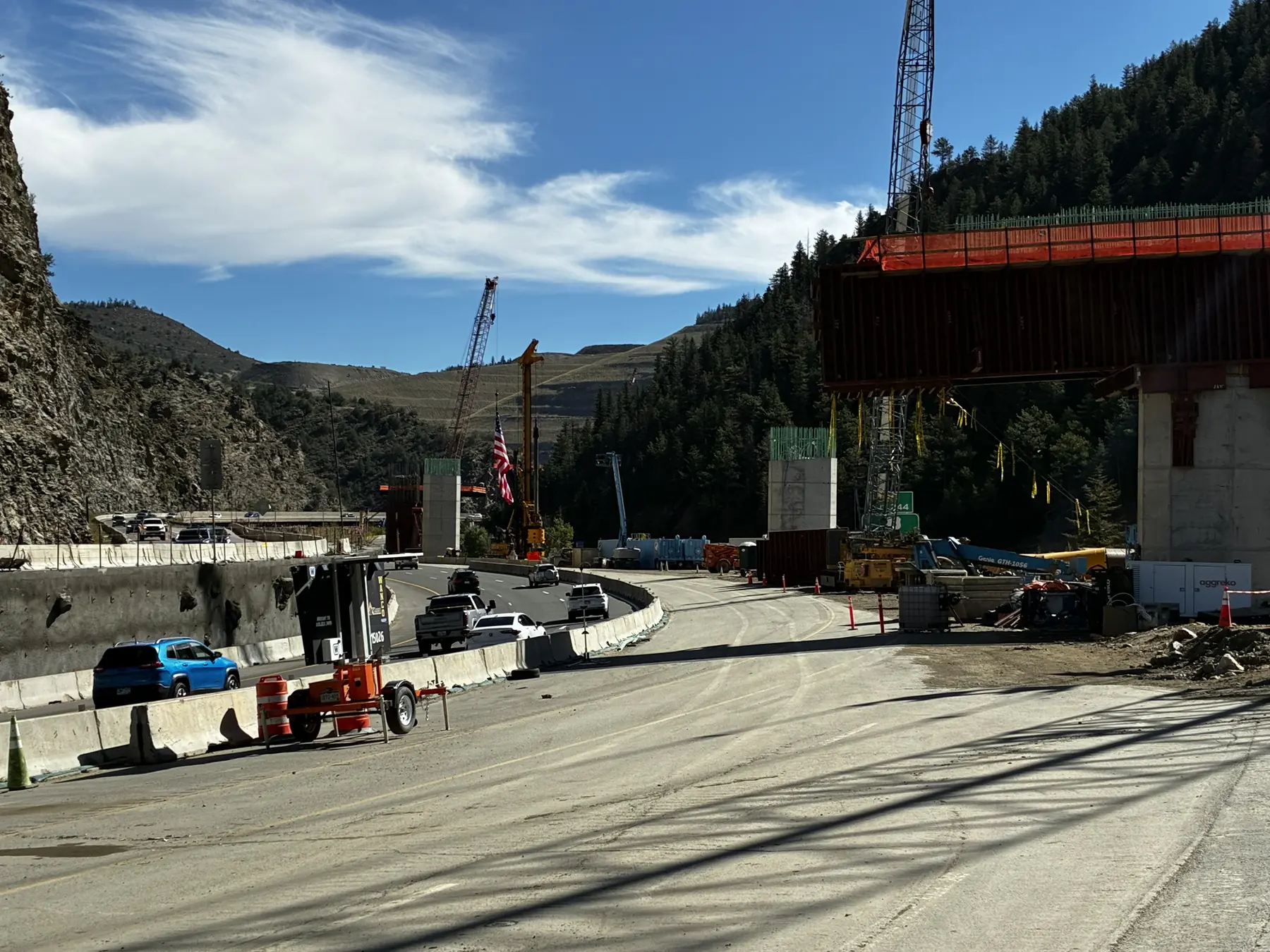
For now, traffic is still moving on much of the existing I-70 alignment while the new structures are built around it.
That means drivers are passing directly beside major bridge construction, cranes, barriers and heavy equipment.
The road is still very recognizable as Floyd Hill. What is changing is everything being built around it.
This is important for travelers because construction impacts do not necessarily mean the highway is closed or even badly backed up. Many days, traffic moves normally through the work zone.
But when lane restrictions, construction activity, weather, crashes or heavy ski traffic combine, this narrow section can lose capacity quickly.
The Veterans Memorial Tunnels
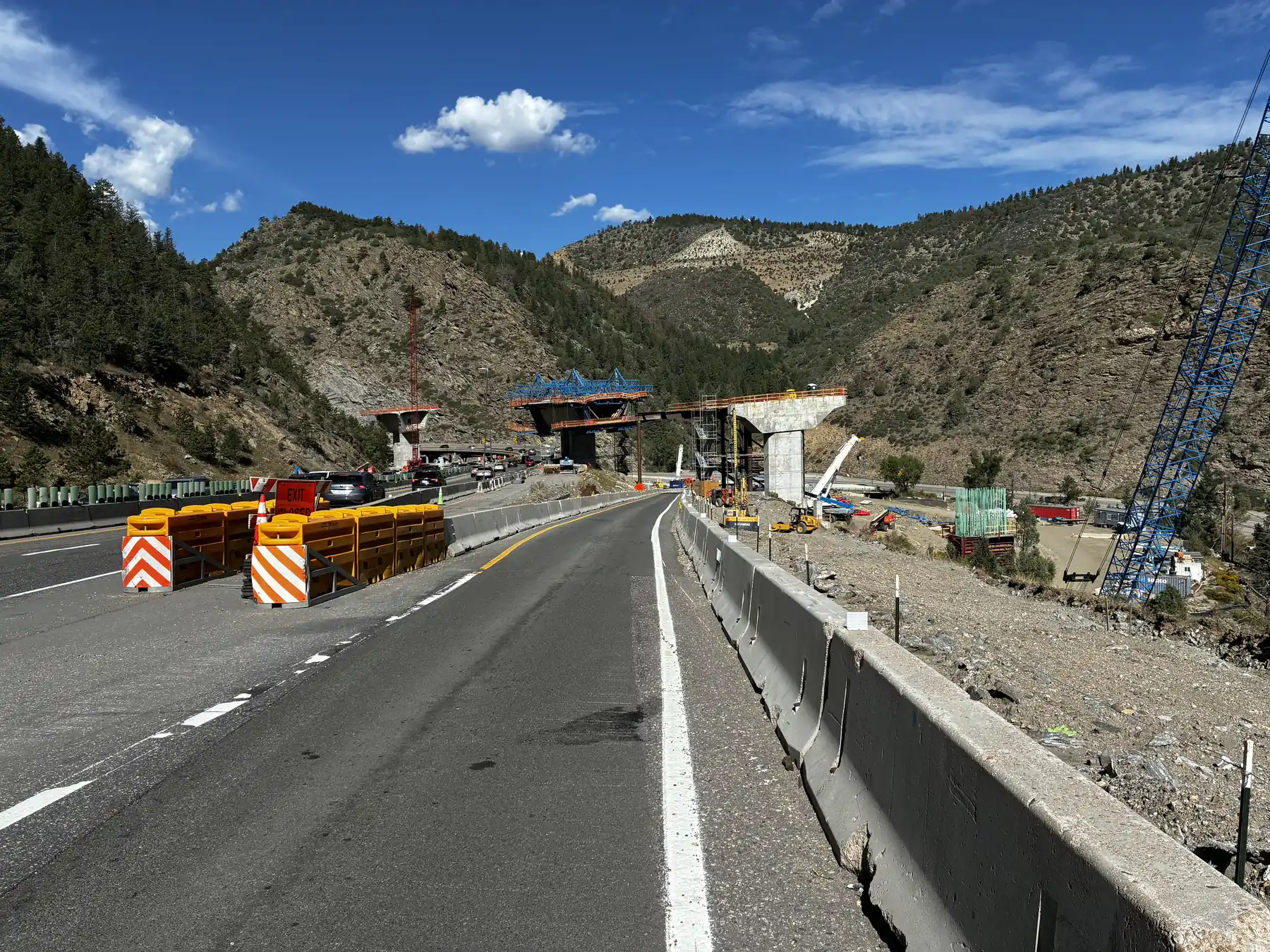
Farther west, I-70 passes through the Veterans Memorial Tunnels before entering Idaho Springs.
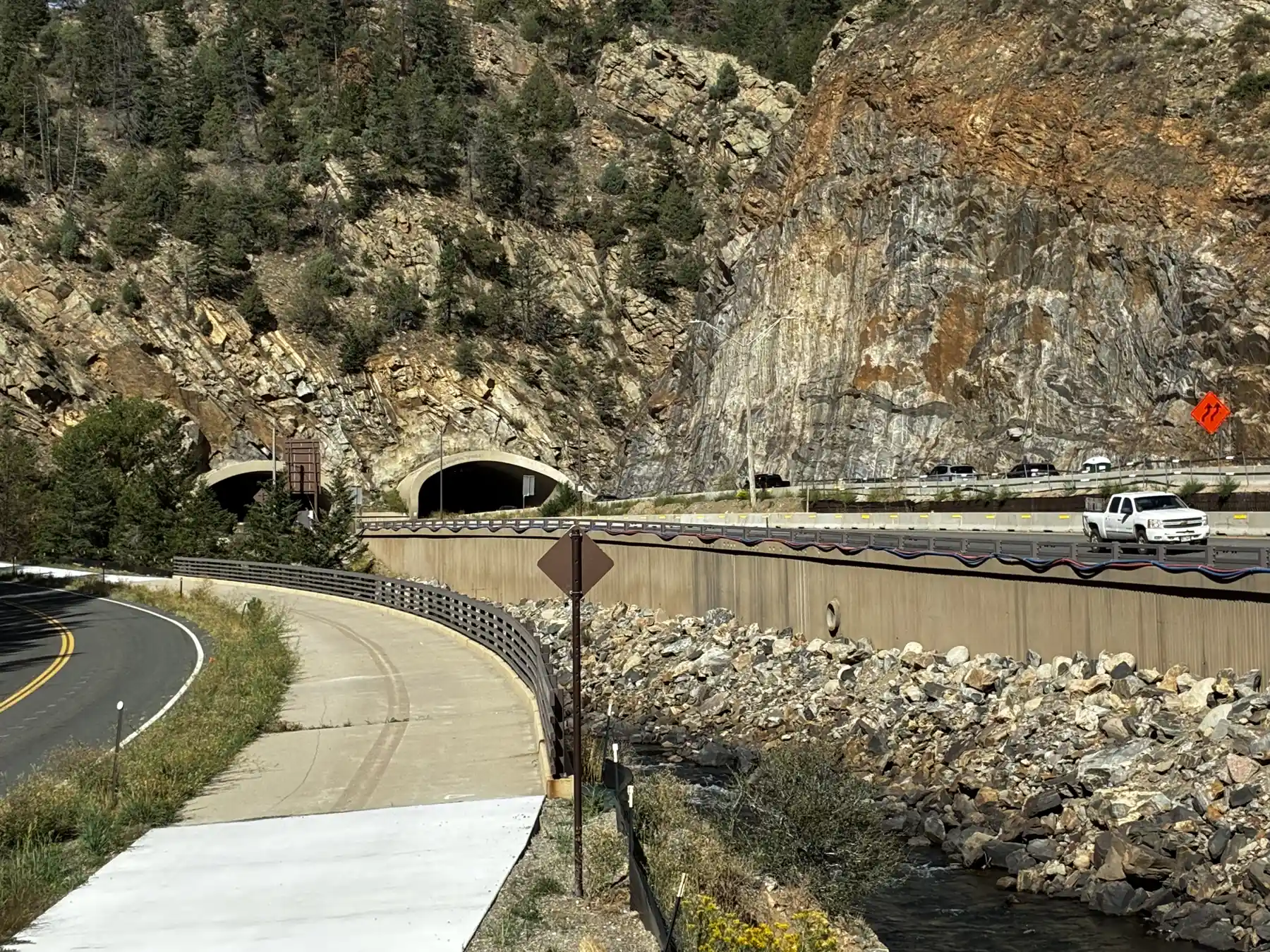
The Floyd Hill project changes the highway alignment between the middle of Floyd Hill and the tunnels, straightening roadway curves and improving sight distance through the corridor.
Anyone who drives Denver to Vail regularly knows how quickly traffic conditions can change through this section.
You can come down Floyd Hill moving normally and suddenly find traffic compressed into the canyon approaching the tunnels.
The new alignment is intended to make the entire transition from Floyd Hill into the Idaho Springs corridor safer and more predictable.
Morning Sun Glare Can Shut Down Eastbound I-70
Construction is only one reason Floyd Hill can disrupt a Vail-to-Denver trip.
During fall and winter mornings, eastbound drivers can encounter severe sun glare as they climb Floyd Hill toward Denver.
This is not just annoying sunlight.
The angle of the rising sun, the grade of the highway and the road configuration can create glare severe enough that CDOT and Colorado State Patrol temporarily close eastbound I-70 for safety.
CDOT says the glare can occur from sunrise until approximately 8:30 a.m., generally from November through February.
When an actual sun glare closure is required, it averages about 45 minutes to an hour.
Eastbound traffic is diverted at Exit 244 at the bottom of Floyd Hill. Drivers can continue on US 6 through Clear Creek Canyon or use the US 40 frontage road and return to I-70 at Beaver Brook.
If you have a morning flight out of Denver, that matters.
A drive that looks completely normal when you check it the night before can need considerably more time the next morning.
Kermit's at the Bottom of the Hill
For years, one of the easiest ways to describe the bottom of Floyd Hill was simply "Kermit's."
Kermit's was the bar at the US 6 junction at the bottom of the hill, and the name stuck with people who have driven, ridden and rafted through Clear Creek Canyon for years.
The business is now Two Bears, but plenty of people who have been around the corridor for a long time still know the spot as Kermit's.
It also happens to sit right where several pieces of the Floyd Hill puzzle come together: the US 6 junction, the sharp turn in the existing highway, Clear Creek Canyon and some of the biggest new bridge construction in the project.
What Floyd Hill Construction Means for Denver-to-Vail Travelers
For most travelers, the biggest issue is not that Floyd Hill is always backed up.
It isn't.
The issue is that when something happens there, the effects can spread quickly.
There is a huge amount of traffic moving through a narrow mountain corridor with limited alternatives.
Construction can mean lane restrictions, overnight closures, heavy equipment and changing traffic patterns.
Then add the normal I-70 variables: snow, crashes, ski traffic, trucks, sun glare and weekend congestion.
That is why we do not treat a Denver-to-Vail airport transfer like a fixed two-hour drive.
CDOT currently estimates the Floyd Hill project at approximately $905 million. Westbound I-70 is scheduled to be in its new alignment by the end of 2027, eastbound I-70 by the end of 2028, and the overall project is expected to be complete in 2029.
How We Handle Floyd Hill
Vail Powder Cars has been driving the Denver-to-Vail corridor for years, and Floyd Hill is one of the sections we watch closely.
For airport pickups, we track the road along with the flight rather than simply relying on a scheduled pickup time.
For trips back to Denver, departure time matters even more.
Winter morning sun glare, construction activity, weekend traffic and weather can all change how much time should be allowed.
Sometimes the right answer is leaving earlier.
Sometimes it is waiting out a temporary closure.
Sometimes US 6 becomes useful.
And sometimes I-70 is completely normal.
The important part is knowing the corridor well enough to recognize the difference.
Our drivers are trained specifically for Colorado mountain-road conditions through the Vail Powder Cars Winter Driving Program.
A Better Floyd Hill Is Coming
The construction is disruptive, but there is a reason so much work is happening here.
The existing Floyd Hill highway was never a great fit for the amount of traffic it carries today.
The sharp geometry, two-lane westbound bottleneck, steep grade and limited sight distance have been problems for years.
The project is designed to fix those issues rather than simply patching the old highway.
Watching the new bridge structures rise above the existing interstate makes it much easier to understand how substantial the rebuild really is.
For the next few years, Floyd Hill will remain one of the most important places to watch when traveling between Denver and Vail.
When the new alignment is finished, it should also remove one of the most persistent bottlenecks on the I-70 mountain corridor.
Traveling from Denver Airport to Vail?
See our private Denver-to-Vail car service, rates, vehicles and airport pickup details.
Denver to Vail Car Service